The first Trans-ENGI in South Eastern Europe

After months of design, we manage to have the basic structure of the Trans-European Network for Green Infrastructure. This network of scientists and policy makers, aims to share information, experiences, expertise and best practices, to support the harmonization between nature conservation and infrastructure development projects in South Eastern Europe.

After our first meeting in Romania (http://green-web.eu/faget-workshop/), we are now confident to work within the EU Strategy on Green Infrastructure (http://ec.europa.eu/environment/nature/ecosystems/strategy/index_en.htm)!

Why females would mate with multiple partners and have multiple fathers for clutches

In our new global study, we make an effort to deal with the long standing enigma of multiple paternity.

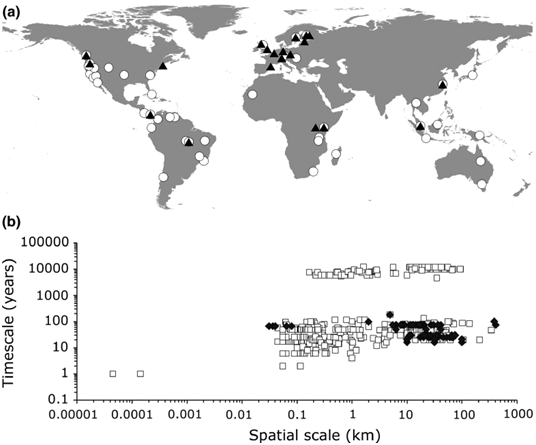
We review the incidence of multiple paternity for sea turtles nesting around the World and further work on high resolution at-sea GPS tracking to show that the specifics of movement patterns play a key role in driving packing density and hence the likely rate of male–female encounters. We conclude that multiple paternity in sea turtles may have no benefit, but is simply a consequence of the incidence of male–female encounters.

New paper: Unravelling the climatic niche overlap of global sea turtle nesting sites: Impact of geographical variation and phylogeny

The processes that determine climatic niche dynamics are complex, especially for wide-ranging species where niche conservatism might differ at different life stages. In our new paper, published in Journal of Biogeography, we showed that geographical factors might supersede phylogenetic components when considering the climatic niche of distinct nesting population units of sea turtles across different oceans, highlighting their adaptive potential to local climate conditions.

read more:  https://doi.org/10.1111/jbi.13092

Global Media attention on our research

Happy to see that our recent paper on sea turtle conservation that was published in Science Advances

(http://advances.sciencemag.org/content/3/9/e1600730), is receiving global attention.

More than 90 articles in the world media; few examples below:

https://www.nytimes.com/2017/09/20/science/sea-turtles-conservation.html

https://www.apnews.com/72e00e77215a4044b94ee4ee3d9f7225/Huge-sea-turtles-slowly-coming-back-from-brink-of-extinction

http://www.abc.net.au/news/science/2017-09-21/sea-turtle-numbers-recovering/8960730

http://www.newsweek.com/conservationists-efforts-protect-sea-turtles-have-been-successful-668230

For some more stats on the paper please visit:

https://scienceadvances.altmetric.com/details/26366201#score

New paper: Open data and the future of conservation biology

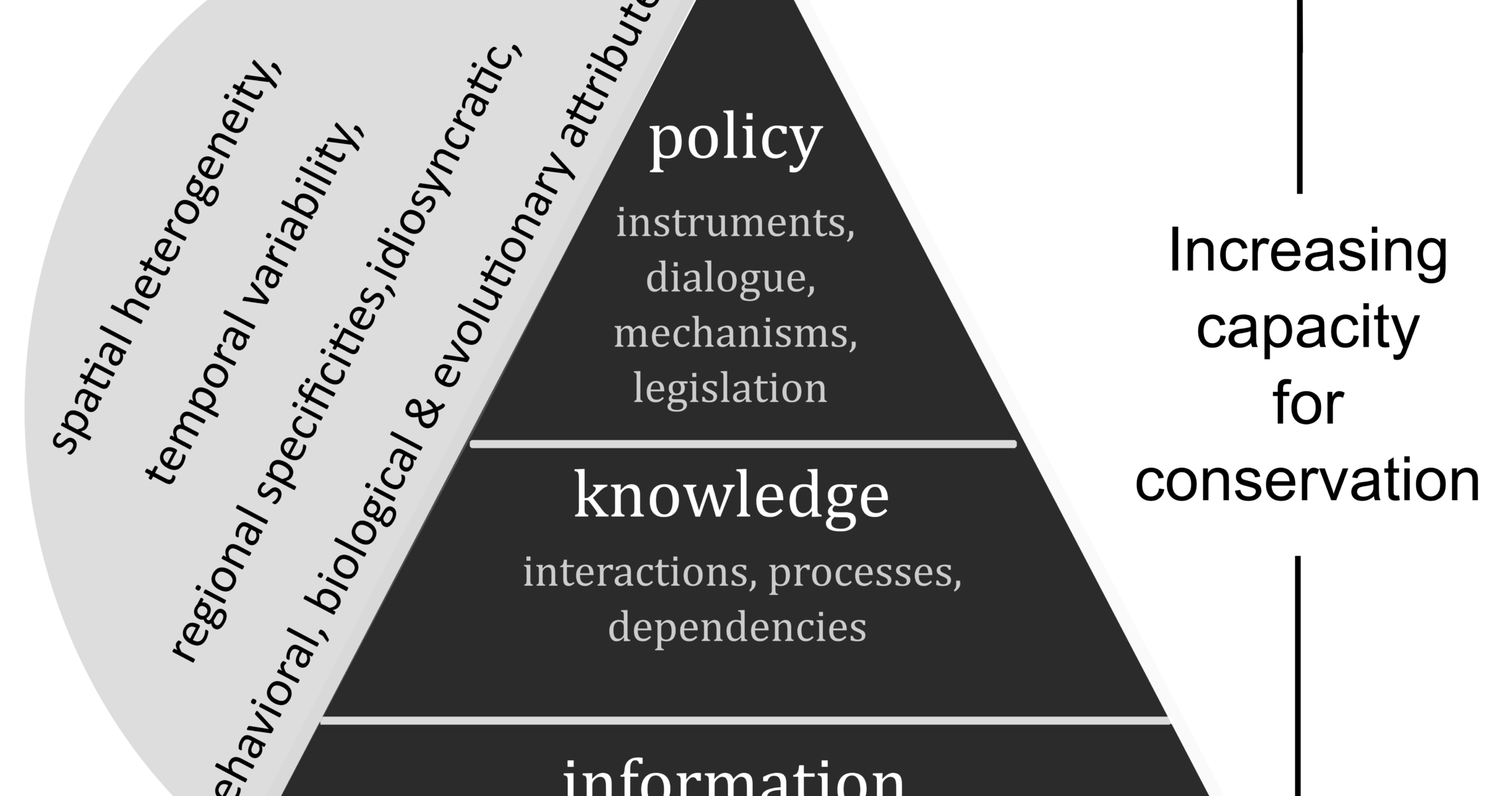
Here, the basic concept behind recent methodological advances — viz. (1) decision support tools for spatial conservation planning, (2) cumulative effect assessments and (3) ecological niche models — which offer innovative analyses for conservation of biodiversity, is briefly presented. The need for standardized analytical methodologies seems to be properly acknowledged. Yet, the application, precision and validation of any such modern tool largely depend on the available data. The need for transparent and credible open-access data is more urgent than ever.

Lancaster, U.K. 7-10 June, 2017

A new multi-disciplinary project on maritime security has just started… Few days at Lancaster University, with Dr. Basil Germond of the Dept. of Politics, Philosophy and Religion to draw a roadmap for studying the environmental and geopolitical dimensions of security.

More efforts for integrating climate change into marine conservation planning

Nice, France, March 20-24, 2017

Great hospitality, new ideas, and interesting plans during the visit at ECOMERS laboratory (FRE 3729) – CNRS – Nice Sophia Antipolis University, France. Supported by EU a mobility action was held at the end of March (20-24), providing the opportunity to design some new research tasks on marine conservation and climate change.

New paper: Population viability at extreme sex ratio skews produced by temperature dependent sex determination.

For species with temperature-dependent sex determination (TSD) there is the fear that rising temperatures may lead to single-sex populations and population extinction. In our new paper published in PRSLB, we show that for sea turtles, up to a point, warm incubation temperatures and female skews in hatchling production can still lead to viable populations.

see more:  http://rspb.royalsocietypublishing.org/content/284/1848/20162576